

What lies beneath the Caribbean? Scientists are only beginning to find out
.jpg)
This Weekend Read is based on reporting by Elizabeth Claire Alberts, senior staff writer at Mongabay, published September 9, 2026, with additional expedition information from Caribbean marine conservation organization SpeSeas.
For generations, Caribbean people have lived beside the sea, travelled across it, depended on it for food and built economies around it. Yet beneath the familiar blue surface lies a Caribbean that remains largely unseen and, in some places, almost completely unexplored.
Scientists have now offered an extraordinary glimpse of that hidden world.
During a month-long expedition into the deep waters surrounding Trinidad and Tobago, a predominantly Caribbean team mapped thousands of square kilometres of previously uncharted seafloor, encountered ecosystems powered not by sunlight but by chemicals escaping from the Earth, collected hundreds of specimens and identified organisms that may represent species never before described by science.
Perhaps just as important as what they found was who was doing the finding.
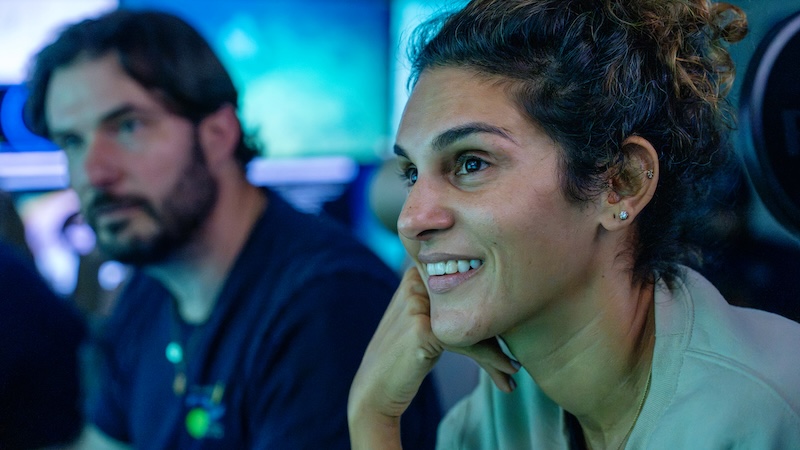
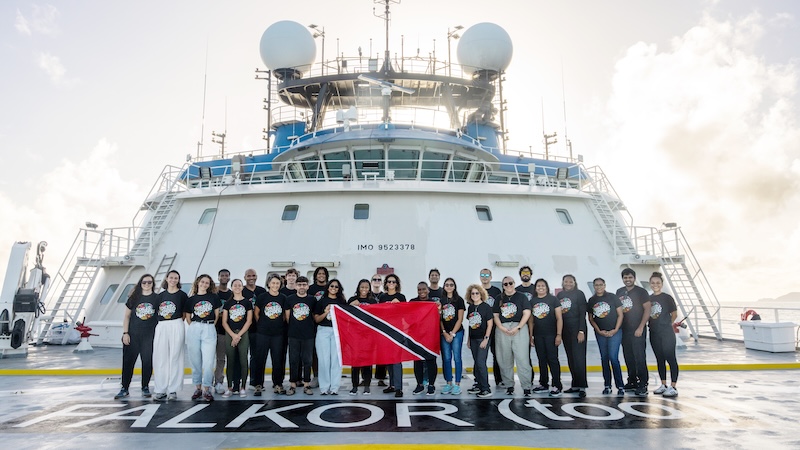
Mongabay's Elizabeth Claire Alberts reported that the expedition marked the first time a predominantly Caribbean scientific team had conducted deep-ocean exploration of this kind in the region. The expedition was led by Trinidad and Tobago-born deep-sea ecologist Dr. Diva Amon, co-founder of marine conservation organization SpeSeas.
A huge part of the country nobody had seen
The scale of what remained unexplored is difficult to appreciate from land.
Nearly 93% of Trinidad and Tobago's waters are deeper than recreational scuba divers can reach. From June 29 to July 28, scientists aboard the Schmidt Ocean Institute research vessel Falkor (too) used remotely operated vehicles, mapping equipment and deep-sea cameras to venture into that darkness.
They mapped 11,335 square kilometres of previously uncharted seafloor, approximately 13% of Trinidad and Tobago's marine territory.
What appeared on their screens was anything but empty ocean.
The researchers recorded corals, carnivorous sponges, squat lobsters, deep-sea sharks and unusual fish. A black swallower was filmed with its stomach hugely expanded after apparently consuming prey larger than itself. Researchers encountered the carcass of a Mobula ray on the seafloor, supporting an entire feeding community of crabs, worms and other animals.
They also collected more than 700 biological specimens.
Among them could be at least 20 species new to science, including possible new genera. One of the most intriguing is an octopus from the genus Graneledone. Amon had observed the animal during a Caribbean expedition in 2014, but scientists were unable to collect it then. This time they did, and preliminary genetic work has made researchers highly confident that it is a previously undescribed species.
SpeSeas says at least 54 species never previously recorded in Trinidad and Tobago's waters were observed during the expedition.

An ecosystem without sunlight
Some of the expedition's most significant discoveries began with bubbles.
Scientists detected 219 streams of bubbles rising from the seabed. Following them led the team to 25 active cold seep ecosystems, where methane and other chemicals escape from beneath the ocean floor.
Unlike most ecosystems familiar to us, these communities do not depend primarily on sunlight. Bacteria use chemical energy through a process known as chemosynthesis, supporting organisms such as mussels and tubeworms in environments that appear completely hostile from a human perspective.
The scientists did not always know what awaited them below. In some places, a strong methane signal led to surprisingly little visible activity. Elsewhere, a small bubble stream led researchers to enormous communities of mussels and tubeworms.
It was a reminder that even in 2026, major ecosystems can exist practically unseen in Caribbean territory.
Caribbean scientists studying the Caribbean
But the expedition was about more than cataloguing animals.
Amon told Mongabay that deep-sea research in the Caribbean has historically involved what she bluntly described as "parachute science", where outside researchers arrive, conduct the work and leave.
This expedition represented something different: Caribbean scientists leading exploration of Caribbean waters, gathering Caribbean specimens and building knowledge that remains accessible within the region.
The specimens will eventually be housed at the Zoology Museum at the University of the West Indies, St. Augustine, increasing its deep-sea collection twelve-fold. Rather than Caribbean biodiversity disappearing into institutions thousands of miles away, local students, researchers and members of the public will be able to study and see material collected from their own waters.
That may be one of the expedition's most important legacies.
Caribbean nations cannot effectively manage ecosystems they have barely studied, and they should not have to depend entirely on researchers elsewhere to tell them what exists within their own maritime territory.
Discovery brings another question: how do you protect it?
Finding these ecosystems also makes decisions about their future more urgent.
Trinidad and Tobago is one of the Caribbean's major oil and gas producers, and as reserves in shallower areas decline, attention has increasingly turned toward deeper waters. Amon warned that the country currently has little protection for its offshore deep-sea environment. Plastic pollution and climate change create additional threats.
The expedition's data are therefore intended to do more than satisfy scientific curiosity. Researchers hope they will eventually influence marine spatial planning, conservation policy and decisions about protected areas.
That issue extends far beyond Trinidad and Tobago.
Caribbean islands are surrounded by marine territory that can dwarf their land area. Beneath those waters may lie ecosystems, species and biological resources that have never been properly documented. At the same time, governments are making decisions about fishing, development, energy, pollution and conservation.
The lesson should resonate across the region, including in St. Maarten: you cannot properly protect, regulate or sustainably use what you do not understand.
Technology is finally making parts of the deep Caribbean more accessible to scientists. One experimental low-cost deep-sea camera used during the expedition was designed specifically to make ocean exploration more affordable and available to researchers who historically could not access expensive deep-sea equipment.
That could eventually change who gets to explore the ocean and who gets to produce the knowledge used to govern it.
For centuries, Caribbean history has been written largely around what happened on its islands and across the surface of its seas.
This expedition is a reminder that another Caribbean exists beneath us.
And we have barely begun to meet it.