

.jpg)


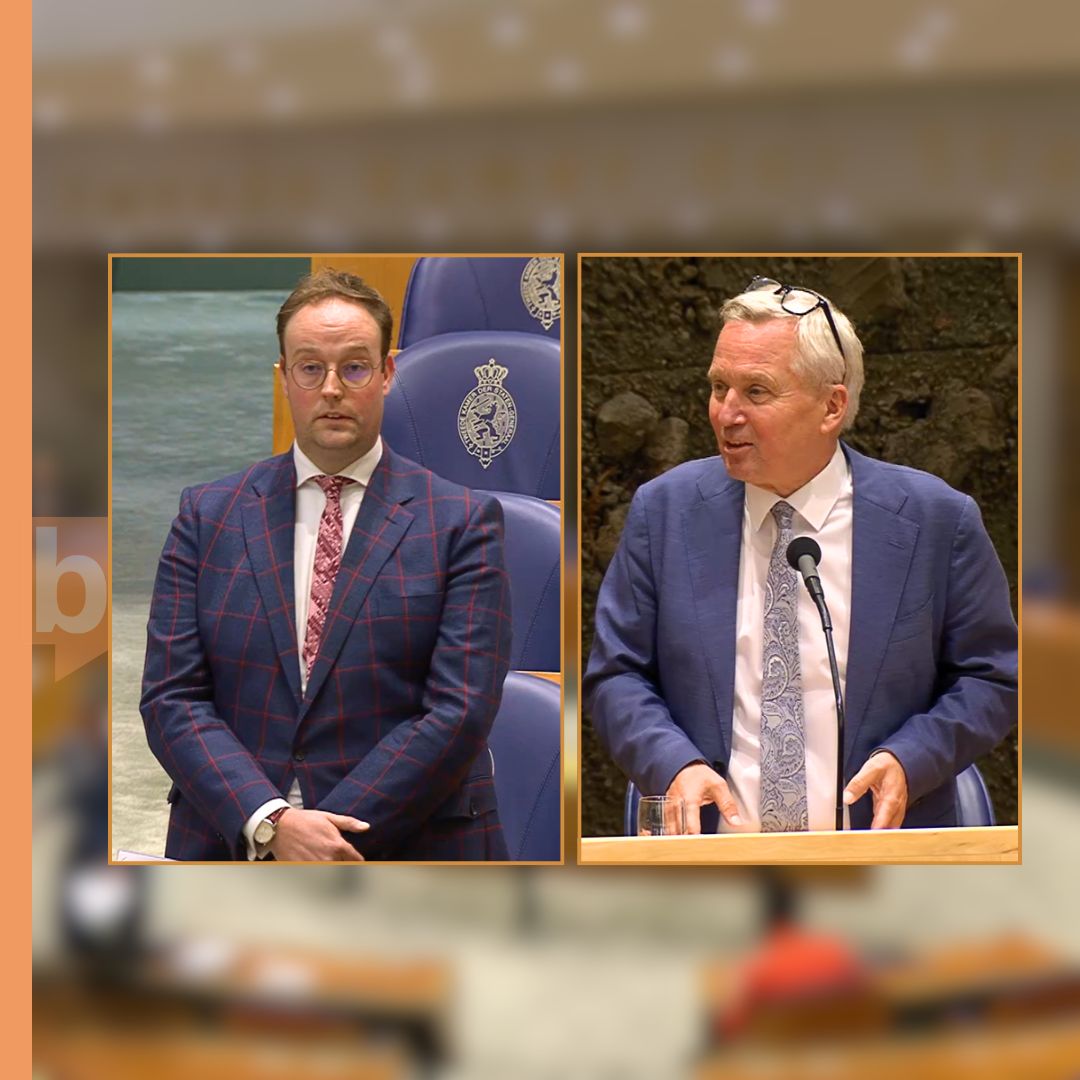
THE HAGUE--Dutch State Secretary for Kingdom Relations Eric van der Burg sharply rebuked Freedom Party (PVV) Member of Parliament Elmar Vlottes during Thursday's parliamentary debate on the 2027 Kingdom Relations and BES Fund budgets, telling him to stop speaking about Bonaire, St. Eustatius and Saba as though they were separate from the Netherlands.
The confrontation on October 8 followed another series of disparaging remarks by Vlottes about the Caribbean parts of the Kingdom, including his description of St. Maarten's financial management as a mess, his suggestion that even a local sports club manages its finances better, and his demand that €30 million in additional funding intended to improve living conditions in the Caribbean Netherlands be redirected to the European Netherlands.
Van der Burg took particular exception to Vlottes repeatedly suggesting that whenever problems arise on the islands, local authorities turn to the Netherlands for financial assistance and intervention.
The State Secretary reminded the PVV parliamentarian that Bonaire, St. Eustatius and Saba are constitutionally part of the Netherlands, meaning their residents are not outsiders requesting assistance from another country.
"Bonaire, Saba and Statia are the Netherlands," Van der Burg told Parliament.
He explained that when problems arise in Dutch municipalities such as Amsterdam, Appelscha or Sliedrecht, nobody describes those communities as turning to the Netherlands for help.
The proper terminology, he argued, would be to say that island authorities are seeking assistance from The Hague or the national government.
By repeatedly saying the islands are turning to the Netherlands, Van der Burg said, Vlottes was effectively placing Bonaire, St. Eustatius and Saba outside the country to which they belong.
The State Secretary then delivered a pointed remark about the PVV's apparent understanding of the Kingdom's geography.
Referring to an earlier suggestion by CDA parliamentarian Tijs van den Brink that the Caribbean parts of the Kingdom should be more visible on maps used in Dutch education, Van der Burg suggested that the first such map should be given to the PVV, because the party apparently does not always understand where the islands belong.
Vlottes Calls St. Maarten's Financial Management “A Mess”
Earlier in the budget debate, Vlottes directed harsh criticism at St. Maarten while questioning the progress of reforms being carried out under the country packages agreed upon with the Netherlands.
He referred to findings indicating that the reforms had taken longer than anticipated and that concrete achievements remained below expectations.
Vlottes also cited concerns from the Committee for Financial Supervision (Cft) about incomplete financial reports and contradictory figures.
Rather than limiting his contribution to questions about accountability and implementation, however, the PVV parliamentarian used dismissive language to characterize the country's financial management.
"It's all nothing. It's just a mess," Vlottes said, translated from Dutch.
He then added, "The local sports club has even better financial management."
Vlottes questioned why the State Secretary was considering additional support for St. Maarten when the country packages, originally expected to be completed by 2027, were now being extended until the end of 2029.
He demanded to know what sanctions would follow if agreed reform targets were again missed and whether further delays would be tolerated.
His remarks were not limited to St. Maarten.
Turning to Curaçao, Vlottes raised allegations of misconduct involving the tax authorities and questioned the country's financial planning, including projected revenue from a proposed tourist entry tax.
He also questioned why Caribbean countries that he characterized as among the wealthier economies in the region should continue receiving Dutch financial assistance.
PVV Wants €30 Million Taken Away From the islands
Vlottes directed further criticism at Bonaire, St. Eustatius and Saba over the Dutch Government's proposed structural allocation of €30 million annually to improve livelihood security.
He argued that people in the European Netherlands were struggling with rising energy, food and fuel costs while purchasing power in the Caribbean Netherlands was projected to increase.
He characterized the proposed additional funding as disgraceful and argued that the money should instead be spent in the European Netherlands.
Vlottes also claimed that the islands were competing with one another over how the additional money should be spent.
His argument came despite continuing concerns raised by other parliamentarians about the high cost of living, poverty and inadequate social protection affecting Caribbean Netherlands residents.
The €30 million allocation is intended to help address those conditions and strengthen livelihood security.
Calls for Bonaire to Be Placed Under Central Government Control
Vlottes also attacked the functioning of Bonaire's local administration, pointing to political instability and longstanding problems surrounding Selibon, the island's waste management operation.
He accused the Executive Council of failing to resolve persistent problems and questioned why the Dutch Government had not intervened more aggressively.
Referring to Bonaire's elected officials, he suggested that the national government was being overly considerate of their sensitivities instead of taking decisive action.
Vlottes proposed that Bonaire effectively be placed under central government supervision, with the Kingdom Representative exercising greater control over local decisions.
He went further by suggesting that if such an arrangement proved successful, it could eventually be extended to St. Eustatius and Saba.
Van der Burg rejected the suggestion that the Dutch Government could simply take over local administration whenever Parliament disagreed with decisions made by elected island representatives.
He reminded Vlottes that the Netherlands operates under the rule of law and that local governments have democratically established responsibilities and powers.
The State Secretary explained that possible intervention on Bonaire had already been examined and that a court had ruled against intervention under the circumstances presented.
He emphasized that the national government was required to respect judicial decisions, even when those decisions prevented the action some parliamentarians wanted.
Van der Burg also corrected Vlottes' suggestion that he was satisfied with developments on Bonaire, explaining that he had said no such thing and intended to discuss the situation with the island's Lieutenant Governor.
A History of Derogatory Remarks About the Caribbean Islands
Thursday's confrontation was not the first time Vlottes' comments about the Caribbean territories prompted criticism.
During a June 1 parliamentary discussion concerning the proposed expansion of Island Councils and Executive Councils on Bonaire, St. Eustatius and Saba, Vlottes made a controversial comparison suggesting that even an asking price of one euro to get rid of the Caribbean territories through the Dutch online marketplace Marktplaats would be too high.
He also used the Dutch term hangmatgedeputeerden, loosely translated as "hammock commissioners," to describe island executives, suggesting that they accomplished little while occupying government positions.
The remarks drew objections from other Dutch parliamentarians, while Van der Burg also criticized the language used by the PVV representative.
Days later, the controversy followed Vlottes into the June 5 to 8 Interparliamentary Kingdom Consultation (IPKO) in The Hague.
During a June 6 panel discussion, St. Maarten MP Sjamira Roseburg challenged the level of commitment being demonstrated toward genuine Kingdom cooperation and referred to the hurtful comments made by Vlottes.
She expressed disappointment that the Dutch parliamentarian was not present during that discussion, explaining that she would have welcomed an opportunity to address the remarks directly with him.
Roseburg also questioned the relatively limited presence of Dutch parliamentarians during the panel, particularly when representatives from St. Maarten, Aruba and Curaçao had traveled across the Atlantic to participate.
Although Vlottes was listed as a member of the Dutch delegation to IPKO, he was absent during the particular session in which Roseburg raised concerns about his comments.
Van der Burg Draws a Constitutional Line
The latest confrontation once again highlights the tension between the PVV's approach to Caribbean affairs and the constitutional responsibilities of the Netherlands toward its Caribbean territories.
Bonaire, St. Eustatius and Saba are public bodies of the Netherlands, with their residents forming part of the Dutch population.
St. Maarten, Curaçao and Aruba, meanwhile, are autonomous countries within the Kingdom, with their own governments and constitutional responsibilities.
These arrangements do not place Bonaire, St. Eustatius and Saba outside the Netherlands, nor do they make the three autonomous Caribbean countries foreign states.
Van der Burg's intervention therefore went beyond a disagreement over spending priorities or the effectiveness of local governments. It challenged the language being used by a Dutch parliamentarian to describe territories and populations that form part of the constitutional structure of the Kingdom.
While financial management, political accountability and reform progress remain legitimate subjects for parliamentary scrutiny, Van der Burg made clear that such debates must also respect the constitutional status of the islands.
For Vlottes, Thursday's debate was another opportunity to argue against additional spending on the Caribbean territories and criticize their governance. For Van der Burg, it was an opportunity to correct what he viewed as an unacceptable characterization of three islands that are part of the Netherlands.
Join Our Community Today
Subscribe to our mailing list to be the first to receive
breaking news, updates, and more.
