

.jpg)


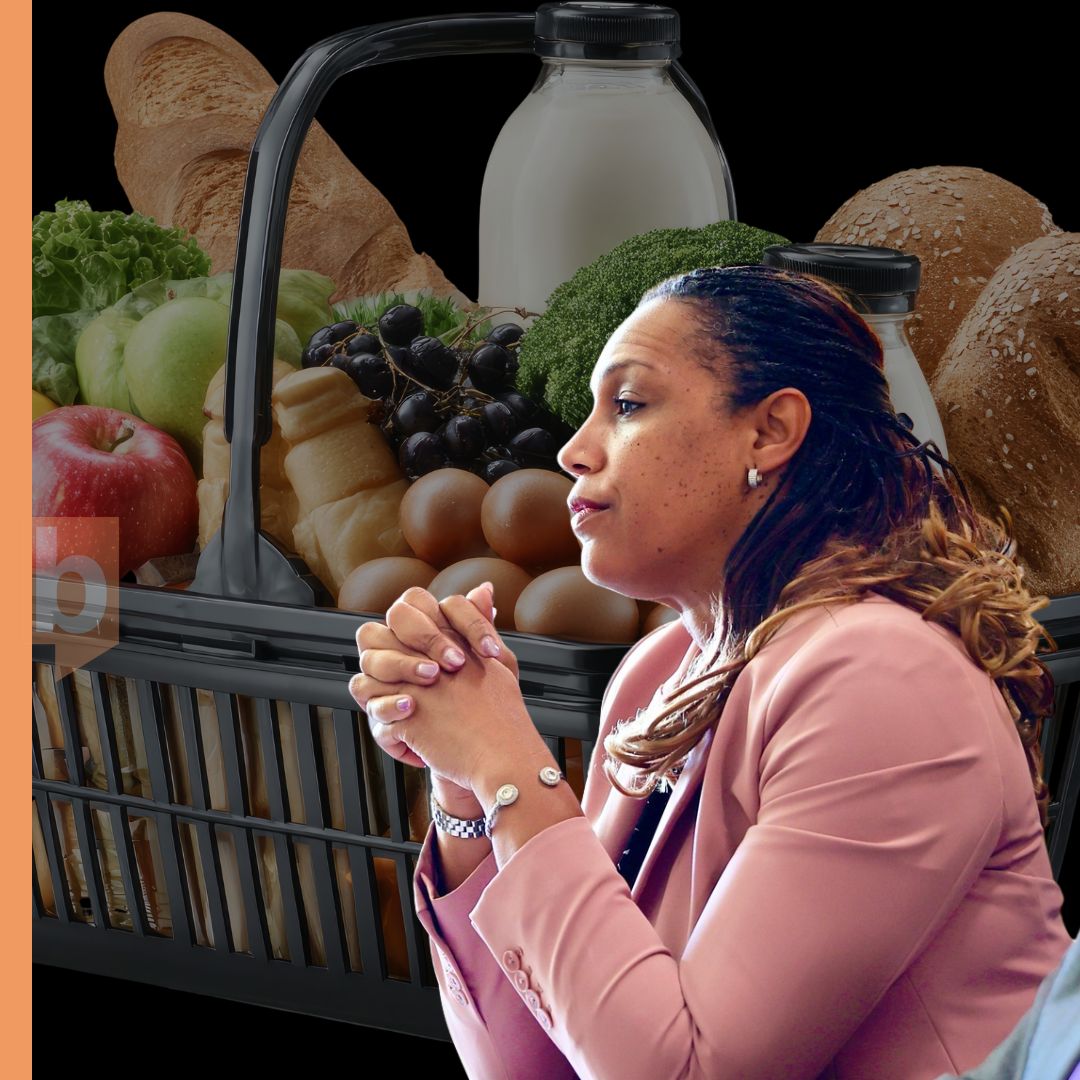
GREAT BAY--Minister of Tourism, Economic Affairs, Transport and Telecommunication Grisha Heyliger-Marten says her Ministry is preparing a broad supermarket pricing and cost-structure study aimed at determining why grocery prices in St. Maarten remain high and which Government interventions could provide the most meaningful relief to consumers.
The study will compare approximately 40 commonly purchased supermarket items in St. Maarten, Curaçao, the Dominican Republic and relevant online markets. Rather than focusing only on shelf prices, the Ministry intends to examine the underlying costs that contribute to those prices, including shipping and freight, utilities, labor, taxation and other operating expenses.
Heyliger-Marten said the Ministry also wants a clearer understanding of the structure of St. Maarten’s wholesale and retail market, including whether limited competition or market concentration is contributing to higher prices, or whether price differences are mainly the result of legitimate local operating costs.
The findings are expected to guide the ongoing revision of the country’s price-control basket as well as Government’s wider work on competition and fair-trade legislation, consumer protection and cost-of-living policy.
“So rather than simply expanding the price-control basket, I want the Ministry's interventions to be supported by evidence. We first need to understand what is driving the prices, and then determine which policy tool will provide the most meaningful relief to consumers,” Heyliger-Marten told Parliament.
The Ministry has already started reviewing the existing basket to determine whether it continues to reflect the essential products most commonly purchased by households.
Work underway includes reviewing the products and categories covered, developing clearer specifications, examining the methodology used to establish maximum prices and preparing the digital workflow that will support the system.
The review also includes an Article 8(17) cross-check, treatment of packaging changes and shrinkflation, compilation of 2025 and 2026 enforcement information and further work on the pricing methodology.
Heyliger-Marten explained that while the current Basket of Goods and the Hurricane items scheduled for publication are not structured around product categories rather than brands, the revised approach being explored would rely on objective product and category specifications instead of specific brands.
The final basket and corresponding prices are still being completed and validated.
To determine what constitutes a fair maximum price for basic food items, the Ministry is reviewing supplier and importer costs, landed-cost components, wholesale and retail margins, package sizes and supporting documentation.
Digital maximum-price system still being developed
The Minister also provided an update on the digital maximum-price system that is intended to eventually allow consumers to view and track regulated prices.
A demonstration version has been developed and is currently being tested and refined, with the Ministry targeting completion of the demo before the end of 2026.
The full system is not yet operational, and a confirmed public launch date has not been established.
The online maximum-price database, which had originally been planned for the second quarter of 2026, was not launched during that period.
Heyliger-Marten said additional work was required to ensure the system is accurate, reliable and properly governed before it is made available to the public.
Outstanding work includes finalizing the pricing methodology, supplier-data requirements, the digital submission process, publication governance, version control and procurement.
The Minister said Government opted against launching an incomplete system simply to meet the original timetable and is instead working to put the required technical and policy framework in place first.
The Ministry also did not meet the requested ten-day period for publication of the Hurricane Maximum Price List.
The current implementation timetable provides for publication of the updated Maximum Price List and Hurricane Maximum Price List during the first full week of October 2026, subject to completion of the necessary technical and legal steps.
Once maximum prices are legally established, the Inspectorate of Economic and Transport Affairs can compare shelf and cash-register prices against the regulated maximum and take enforcement action where violations are found.
Heyliger-Marten noted that tax exemptions and maximum-price controls are separate legal mechanisms.
54 inspections, 23 enforcement actions in 2026
For 2026 to date, IETA has carried out 54 price-control inspections.
The Minister reported 23 enforcement actions involving price-control violations, with approximately Cg. 8,225 in fines assessed.
IETA applied what the Minister described as a zero-tolerance approach to confirmed substantive violations.
The Inspectorate could not confirm the number of repeat offenders based on the information currently on file.
Heyliger-Marten said the wider approach is intended to move Government beyond simply adding more products to a regulated list without first determining what is driving supermarket prices.
By examining supplier costs, local operating expenses, wholesale and retail structures, regional price differences and the level of competition in the market, the Ministry expects to develop a stronger basis for decisions on price controls and other consumer-protection measures.
The supermarket study and revised basket are therefore expected to form part of a wider effort to determine where Government intervention can have the greatest effect on household expenses while ensuring that regulated prices are supported by verifiable cost information.
Join Our Community Today
Subscribe to our mailing list to be the first to receive
breaking news, updates, and more.
