




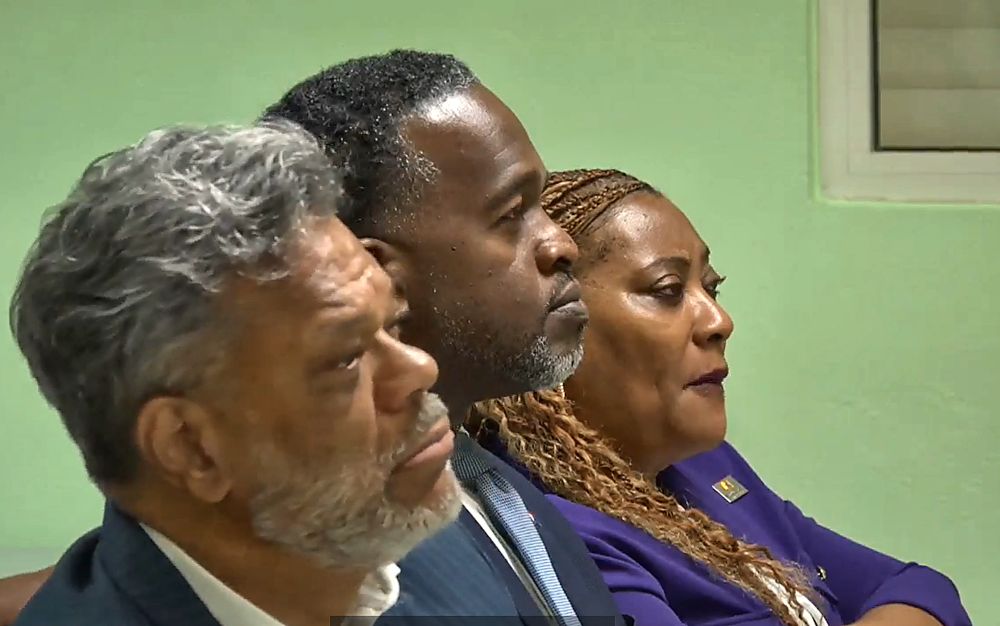
GREAT BAY--Ombudsman Gwendolien Mossel has called for a government-wide response to domestic abuse in St. Maarten, following a systemic investigation that identified shortcomings in legislation, institutional cooperation, emergency protection, child safeguarding and support services for survivors. Presenting the findings on Tuesday evening, November 24, at the University of St. Maarten, Mossel said the country's existing framework does not adequately protect survivors and children.
The presentation formed part of the Ombudsman’s awareness event, “Behind Closed Doors: Raising Awareness of Domestic Abuse,” which also featured the premiere of a documentary produced to complement the investigation. Launched in March 2025, the investigation involved approximately 50 interviews, including group discussions with survivors, government representatives, school care teams, young people, professionals and civil society organizations.
Mossel explained that the investigation originated from several complaints received by her office in late 2024 and early 2025 within a relatively short period. Most involved children who were either directly subjected to abuse or exposed to violence within their homes, raising questions about the effectiveness of existing institutions and protection mechanisms.
“Domestic abuse may happen behind closed doors, but its impact does not stay there,” Mossel stated, explaining that abuse affects children in classrooms, adults in workplaces and families across generations, regardless of income, religion or neighbourhood.
The investigation examined the responsibilities of the Ministries of Public Health, Social Development and Labour (VSA), Education, Culture, Youth and Sport (ECYS), and Justice. Among its findings was that a domestic abuse policy had reportedly been signed, but its status remained unclear and the document had not been published.
Mossel said institutions continue to operate largely independently of one another, with weak referral systems, inadequate follow-up procedures and unclear lines of authority. Existing legislation also focuses primarily on individual incidents of physical violence, leaving patterns of coercive control, intimidation and other forms of non-physical abuse insufficiently addressed.
The investigation identified gaps in emergency protection measures, reporting obligations, victims’ procedural rights and safeguards relating to child custody. Survivors whose residency status depends on an abusive partner face additional difficulties, while formal cooperation arrangements with authorities on the French side of the island are lacking.
Staff shortages, unstable funding and inconsistent record-keeping were identified as problems affecting the delivery of services. Survivors interviewed during the investigation reported delayed emergency responses, dismissive treatment and breaches of confidentiality. Abuse occurring after the separation of partners, particularly through child custody and visitation arrangements, was also found to receive insufficient attention.
Mossel expressed concern that children are not consistently recognized as individuals with their own protection needs. The Child Safety Code has yet to be formally established in legislation, children lack an independent complaint mechanism, and access to psychological counselling can depend on the consent of a parent who may be contributing to the circumstances requiring intervention.
The investigation also highlighted shortcomings in foster care and support for young people in detention. Funding reductions have affected the capacity of Safe Haven, while the closure of its transitional shelter has further limited accommodation options for survivors. Requirements for police or medical reports before admission can create additional barriers for individuals seeking refuge.
Among the Ombudsman’s recommendations is the publication and funding of a government-wide domestic abuse policy, supported by emergency barring and protection orders, stronger victims’ rights, protection of survivors’ residency status and formal cooperation with French-side institutions.
Mossel also recommended establishing a confidential, multilingual, 24-hour reporting and advice line, supported by established referral and follow-up procedures involving the Police Force of St. Maarten, Court of Guardianship, schools and care providers.
Additional recommendations include multi-year funding for Safe Haven and Victim Support Services, expanded shelter capacity, improved access to mental health care and legal assistance, stronger child support enforcement, parenting support programs, rehabilitation services for perpetrators and the establishment of a Children’s Ombudsman.
The Ombudsman also called for greater attention to the social consequences of economic development, suggesting that government could explore incentives for employers to enable working parents to participate more actively in their children's lives.
“For generations, we have focused on developing our economy,” Mossel said. “Progress must also be measured by the well-being of our people.”
While acknowledging the dedication of professionals and volunteers who frequently work with limited resources, Mossel cautioned against a system that depends on individual sacrifice to compensate for institutional shortcomings.
“Compassion must be built into how institutions work,” she stated.
Mossel called on government, employers, schools, faith leaders, civil society organizations and residents to participate in efforts to prevent abuse and strengthen protection for vulnerable individuals.
“Domestic abuse happens behind closed doors. Our response must not,” the Ombudsman concluded.
Join Our Community Today
Subscribe to our mailing list to be the first to receive
breaking news, updates, and more.